“Launching a European CLO platform: The Irish edition” is a podcast series from our Structured Finance and Securitisation Group, exploring the key considerations for managers establishing and operating European collateralised loan obligation (CLO) platforms.
In the series, Paddy Rath, a partner in the Group, draws upon the experience of our market-leading Structured Finance and Securitisation, Financial Regulation, Tax and Corporate Services Groups to examine the Irish legal, regulatory and practical issues that arise throughout a CLO platform’s lifecycle. Designed for both first-time CLO managers and those already active in the European market, the series provides practical insights into navigating an increasingly complex regulatory and operational environment.
Episode one: Regulatory considerations for CLO managers
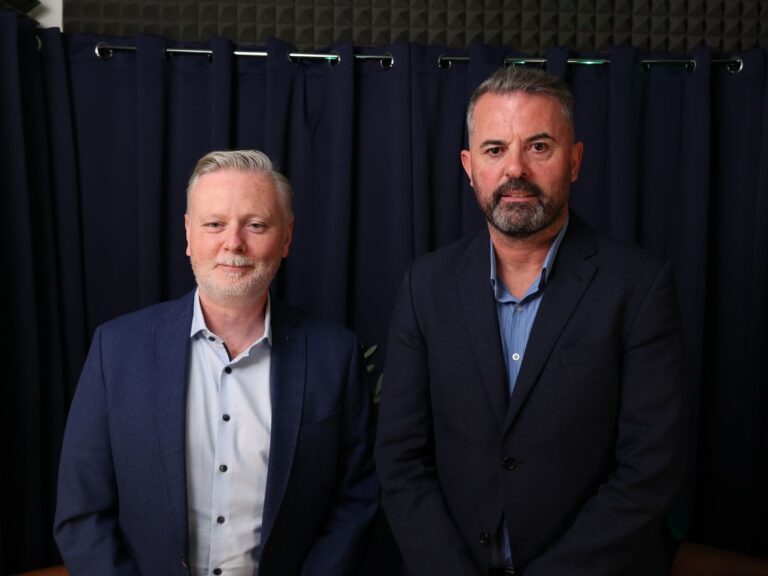
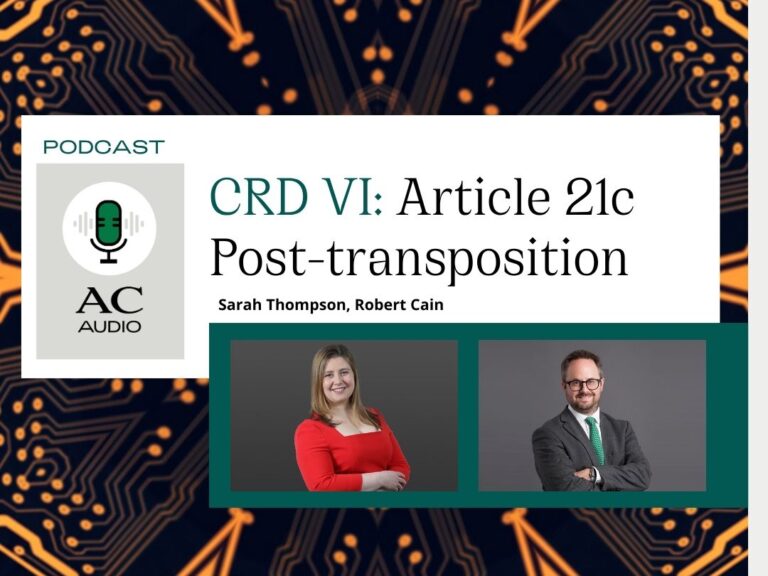
In the first episode, Paddy Rath, Partner in our Structured Finance and Securitisation Group, is joined by Rob Cain, Partner in our Financial Regulation Group, to discuss some of the key regulatory gating items that they encounter when helping managers establish a European CLO platform. Together, they explore MiFID requirements and recent developments affecting the market including Article 21(c) of CRD VI.
Podcast Transcription
Paddy Rath
Hello and welcome to the first episode in our mini series on launching a European CLO platform. My name is Paddy Rath and I’m a partner in the Structured Finance and Securitisation Group here at Arthur Cox. I’ve been working on CLOs now since the advent of CLO 2.0, so almost 13 years now. Just to set the scene for this mini series. A lot has been written in recent months about new managers exploring the launch of European CLO platforms, and given that most CLO SPVs are Irish established entities, we thought it’d be a useful time to discuss some of the Irish legal, tax, and regulatory aspects that need to be considered when launching a European CLO platform. This mini series should be of use to those exploring the launch of European CLO platforms but also to those with existing European CLO platforms who maybe want to brush up on some of the Irish legal, regulatory, and tax aspects. So today we’re going to focus on some regulatory gating items with an Irish nexus. And to discuss these items, I’m joined by Rob Cain, who is a partner in our Financial Regulation Group here at Arthur Cox, and dare I say, a veteran podcaster. Rob, thank you very much for joining me in my first foray into podcasting. How am I doing so far?
Rob Cain
Very good. Well, apart from calling me a veteran, but I’ll let you off. But yeah, really good to be here.
Paddy Rath
Okay, brilliant. We’ll stick to the facts so. Rob, can you tell me a little bit about you and your team here at Arthur Cox and what you do?
Rob Cain
Yeah, absolutely. Yes, I’m a partner in the Financial Regulatory Group. We have two partners, myself and Sarah Thompson, an of counsel, we have a director in Denise Murray, six or seven associates. So a team of around ten to twelve people. We have a sort of a cradle to grave regulatory practice. That’s what I call it. We do everything from establishment to firms looking to wind up and everything in between. Lots of advice on structuring, particularly we support you and the team on structuring, advice on transactions, regulatory development advice with you and the team. We do a lot of work in corporate governance. We do regulatory investigations, AML, anything regulatory we do.
Paddy Rath
Very good. I think in terms of the kind of conversations that I would have with new CLO managers, they’re always very keen to get ahead of any regulatory gating items that might stop or hinder the launch of their European CLO platform. And so it’s fair to say that collateral managers’ UK counsel probably shoulder a lot of the burden in terms of securitisation regulation, risk retention, but there are some kind of distinct Irish pieces where we need to provide regulatory advice. The one that springs to my mind is MiFID and the Irish safe harbour exemption that may be available. Would you be happy to talk a little bit about that?
Rob Cain
Yeah, absolutely. Yeah. Maybe just to give you a sense as well as to how we sort of work with the CLO practice. So in the regulatory team, we provide advice to a wide range of regulated entities, banks, investment firms, payment institutions, e-money firms, etc. In the CLO space, we advise on structuring, we advise managers setting up operations, new legal developments, and all that sort of stuff. So we work with you and the team on a really regular basis. In terms of the safe harbour, that’s probably the piece of law that we advise the most of, comes up all of the time. And I think it’s particularly important because it allows non-EU managers to provide services to Irish SPVs without needing a licence. So without needing to be authorised under our MiFID implementing legislation, which otherwise applies where you provide investment services in relation to financial instruments. So if you’re portfolio managing, advising, etc. So this is a really important exemption for our CLO manager clients. So to make use of the safe harbour, there’s kind of five things that have to be true. So five conditions that you have to meet. Okay, let’s hear it. So we’ll go through them. Some are easier to conceptualise or think about than others. So the first one is an easy one. You can’t have an Irish branch. You have to have no permanent presence here. That’s pretty easy to meet, in most cases the guys don’t have a branch here. Next one, have to have a headquarters outside the EU. That’s fine as well. Nice and straightforward. Third one is that the manager has to be properly authorised and supervised in its home country, so its home member state. That can sometimes be a little bit tricky because sometimes we’ve come across managers who aren’t authorised in their home member state for whatever reason, or they’re benefiting from an exemption.
So that’s one to think about. That’s the third one. The fourth one is that there has to be a cooperation arrangement between the Central Bank of Ireland and the home state regulator. There isn’t sort of a complete list of those cooperation arrangements. Some of them are sort of private between regulators, but a good place to start is the IOSCO MOU. And then Schedule 2 has a list of this kind of like global MOU for information sharing. So that’s the fourth requirement. And the fifth and final one, which is probably the most important for the safe harbour, is that it only applies where you’re providing services to eligible counterparties, or what we call per se professional clients. So those are sophisticated institutional clients, other regulated entities. Critically, SPVs are included in that list, and other types of entities. So those are the
Paddy Rath
non-elective people.
Rob Cain
Exactly. So retail, for example, natural persons. The safe harbour doesn’t apply. So if we take a step back, how does that kind of work and how do we see that working in practice? If you meet the conditions, you’re exempt. Typically, US and UK managers will inevitably meet the conditions, and US managers we very commonly come across.
Yeah, yeah.
Paddy Rath
But I guess probably from your perspective, it would be advisable to work through the analysis, not to assume you meet the criteria, right?
Rob Cain
Absolutely. Yeah. Take advice and get it written down. We’re very happy to do that.
Paddy Rath
Yeah, yeah. So I guess very high-level summary, MiFID comes into play when you are managing financial instruments such as bonds. So a bond bucket in a CLO, for example.
Rob Cain
Exactly. Yeah. So financial instruments, stuff like shares, bonds, derivatives, range of debt securities, units in a collective investment scheme— might come on to it in a minute— but critically, it doesn’t include loans. So loans are not financial instruments.
Paddy Rath
Yeah. And sorry, that’s an important nuance to remember, particularly if a manager is engaged in a protracted regulatory process or an authorisation process.
Rob Cain
Exactly.
Paddy Rath
And they want to hit the ground running, they can set up a warehouse from an Irish perspective anyway, without triggering an authorisation requirement if they are solely purchasing and managing loans, right?
Rob Cain
Exactly. Yeah. Advice, managing, executing transactions in loans, all unregulated. When you move into the securities space, financial instruments space, bonds, etc., that’s when you have to issue under MiFID.
Paddy Rath
Yeah. Yeah.
Rob Cain
Okay.
Paddy Rath
Well, like MiFID, I guess in this space, it’s nothing new, but I think for new managers, people kind of looking at entering Europe, particularly from the US, something to be aware of, something to discuss early with you guys, I think.
Rob Cain
Absolutely. People tend to want to know, am I able to carry on the business here without needing a licence? That leads to a discussion around the safe harbour.
Paddy Rath
Yeah, perfect. Okay. Well then, how about we move on to something a little bit more topical that again kind of falls into the bucket of regulatory regimes that collateral managers should be aware of when looking at funding an Irish SPV. And CRD VI Article 21c is very topical at the moment. So maybe kind of high-level summary of CRD VI and how it can apply to CLO transactions. And I guess what we’re seeing as things develop in this space.
Rob Cain
Really, really topical at the moment. We’ve done podcasts on this, we’ve had loads of literature on this, and loads and loads and loads of questions at the moment from clients. We’re doing loads and loads of advice on this. So to kind of reiterate some of the stuff we’ve we’ve put out before. Article 21c CRD VI imposes a restriction on non-EU banks providing banking services into the EU at its simplest. So deposit-taking, lending, other core banking services like issuing guarantees, commitments, and things like that. It’s a big issue in Ireland because we’ve historically not regulated commercial lending. So to date, or historically, anybody could lend into Ireland on an unregulated basis where the borrower is not a natural person, nice and straightforward. So SPVs have never had to worry, Irish SPVs at least, have never had to worry about where they get their credit from.
Paddy Rath
Yes.
Rob Cain
21c comes along and changes that because of this restriction for non-EU banks. Really important point, just applies to non-EU banks and certain big investment firms. Doesn’t apply to unregulated lenders. So if you get your credit from an unregulated lender, you’re fine. A non-bank lender, you’re fine. Exactly. Bob’s your uncle. It’s the banks, the non-EU banks you have to watch out for. So there’s a general prohibition, and it’s particularly relevant, I think, to SPVs in the context of, as I said, where they’re funded by a non-EU bank at the warehouse stage, or where you’ve got a class A loan from a non-EU bank in the capital stack at the CLO stage. So that’s where this becomes relevant in the CLO space. Now, there are exemptions available, and there’s been a lot of debate around how the exemptions play out, what they mean in practice, how they’re going to work. We’ve got little or no guidance in an Irish context. We’ve actually got little or no guidance in a European context around how some of the exemptions work. So we have spent a lot of time with clients over the last few weeks and months, Sarah Thompson and I, the other partner in the group, advising clients around this.
And there’s a sort of a consensus, I think, emerging around how the exemptions will play in practice, and in particular, how the reverse solicitation exemption will work in practise. So the way the legislation is drafted, if you provide, for example, a loan on an unsolicited basis, so at the initiative of the borrower, where you don’t solicit the, you don’t sort of push or market the lending, then there’s an exemption effectively.
Paddy Rath
Yeah.
Rob Cain
in the structured finance space, and indeed in other industries as well, just the way transactions come about, where you have sponsors, you have a borrower that sort of an SPV created at the end of the process. The idea of solicitation is kind of hard to get your head around. It’s not like there’s a borrower who you can sort of market to and actively solicit. I think the way we see the market playing out over the next little while is that people will become comfortable, I think, with reverse solicitation. Based obviously on the structure and how they actually put their structure together.
Paddy Rath
So the factual matrix is important, right?
Rob Cain
Super important. Yeah. So the fact that you shouldn’t assume that you can benefit from reverse solicitation. It’s very fact-dependent, but we’re sort of hopeful, and we think that the industry will sort of coalesce around a reasonable interpretation of that. And in other areas, or in other sectors, not necessarily in the CLO space yet, we’re starting to see borrowers become quite savvy and look to support their lenders by, for example, confirming that the loans were provided on an unsolicited basis. The really sophisticated borrowers, keen to get credit and are happy to support the factual matrix that you’re looking to put in place.
Paddy Rath
Yeah. Okay. So there is a kind of a narrow suite of exemptions, but I think in summary, we feel you may be able to avail of exemptions, but if you’re not, then there are also structuring solutions, I think, that are coming around, right?
Rob Cain
Yeah. So some structuring solutions. So the number one is kind of lending through lending through an unregulated entity. I said at the start, this restriction, 21c, just applies to lending by, in this case, non-EU banks. So if your credit’s provided by a non-bank, in theory, not caught. We’re also seeing people think about structuring transactions where instead of a loan, you fund through a sort of security.
Paddy Rath
Yeah. So I think, again, it’s one of these regulatory kind of items that managers need to be aware of.
Rob Cain
Exactly. Yeah.
Paddy Rath
Not necessarily fatal. Applies in the context of non-EU banks and large investment firms lending. So will in a CLO context, probably senior loan in a warehouse, perhaps a class A loan in a CLO, there are structuring solutions. So again, it’s just something for managers to be aware of, discuss with their lenders when they’re looking at kind of setting up the lending arrangements into the Irish SPV.
Rob Cain
Yeah, exactly. And the key thing to remember as well is that it’s a lender issue, not a borrower issue. So it’s for the banks to sort out.
Paddy Rath
Yeah, perfect. Okay. All right, look, that was a really helpful, I think, whistle-stop tour of some of the kind of regulatory gating items that managers need to consider when they’re launching their first European CLO platform. Brendan Kennedy and I from the Structured Finance Group will discuss some of the business as usual regulatory matters that impact the SPV later in the series. So Schedule 2 AML, credit reporting, You know, the old chestnuts. But for now, thank you very much for joining, Rob. Could you give us your three top tips then for CLO managers looking to launch a European CLO platform?
Rob Cain
Yeah, so check your licencing position, make sure that what you’re doing doesn’t trip over one of the licencing regimes here, particularly, well, mainly MiFID. So make sure that you sort of meet the requirements of the safe harbour. That’s number one. Number two, have in mind that sort of loans versus financial instruments, bonds, and splits. So services in relation to loans, unregulated. Services in relation to debt securities, bonds, et cetera, are. So you need to be mindful sort of at which point you’re tripping from a completely unregulated activity into the MiFID space, in which you need the safe harbour. And then the third one is one we spent a bit of time talking about a minute or two ago, Article 21c. Just be mindful that your lender will need to make sure that they’re 21c compliant where relevant.
Paddy Rath
Yeah, so be on inquiry, but we don’t think it will be a fatal issue.
Rob Cain
No.
Paddy Rath
Yeah, brilliant. Okay, well, look, brilliant tips, Rob. Thanks very much for joining us today. That’s it for today’s episode. Join us for the next episode where we will discuss some of the practical aspects of establishing your first Irish CLO SPV. I’ll be joined by Fiona De Lacy, the Managing Director of our Corporate Services Group here at Arthur Cox. If you’d like some more information on anything we’ve discussed today, please do not hesitate to reach out to Rob or myself, or alternatively, visit arthurcox.com/clo. Thank you.
Episode two: Administering your Irish SPV
In the second episode of the series, Paddy Rath, Partner in our Structured Finance and Securitisation Group, is joined by Fiona de Lacy, Managing Director of our Corporate Services Group to discuss the practical aspects of establishing and operating an Irish CLO SPV, from the incorporation process and governance framework to the ongoing compliance and administrative requirements that arise throughout a transaction’s lifecycle. The episode also highlights key considerations for managers entering the European CLO market and the role of corporate services providers in supporting Irish CLO structures.
Podcast Transcription
Paddy Rath
Hi everyone, and welcome to episode two in our mini series on launching a European CLO platform, the Irish edition. My name is Paddy Rath, and I’m a partner in the Structured Finance and Securitisation Group here at Arthur Cox. I am delighted today to be joined by my good friend Fiona de Lacy. Fiona and I previously worked together for nine years, and Fiona is the Managing Director of our Corporate Services business here at Arthur Cox. So Fiona, before we get down to the nitty-gritty, can you tell me a little bit about your journey so far at Arthur Cox, the development of the Corporate Services business here, and how things are going?
Fiona de Lacy
Yes, no problem, Paddy, and delighted to be here. As you well know, prior to joining Arthur Cox, I spent nearly a decade building a corporate service provider for another law firm. When I joined Arthur Cox, I was given a blank canvas, an enormous amount of support, and once again, an opportunity to build something from scratch. That has been really exciting, and it’s been a wonderful first year. What we’ve been aiming to do is build a technology-enabled corporate services business that provides law firm style corporate services to our clients, a business that is fully integrated with Arthur Cox’s legal, tax, and listing offering. So far, it’s been going really well, and I’m happy to say it’s been a wonderful first year.
Paddy Rath
Good. Well, I think you’re being slightly modest. My understanding is that for 2026, the Arthur Cox Corporate Services business is fourth in terms of incorporations among corporate service providers across Dublin. That’s a great achievement in the space of a year. What do you attribute your early success to?
Fiona de Lacy
I think there are probably three core ingredients. Without a shadow of a doubt, first and foremost is the quality of my team. My CLO transaction management and accounting team has some of the most experienced professionals in this market, in the Dublin market, many of which I’m delighted to say I worked with previously. So, huge credit to the quality and the depth in the team for the success of the last year, and it’s clear the clients are recognising that. Secondly, I would say how we’ve embraced technology has really enabled us to grow quickly in this first year. We really are investing in technology, and as you’d be aware, Arthur Cox have recently announced their partnership with Legora, but separate to that, we have a very sophisticated SPV entity management system that really enables us to deliver our transaction management, compliance, regulatory, and very importantly, our client accounting services to our clients in the most efficient and controlled environment. And that is really enabling us to do very well and to deliver the type of quality that we want to deliver, but equally to set an incredibly strong foundation to how we grow and expand over the coming years.
Paddy Rath
Yeah.
Fiona de Lacy
Third is probably something a little bit more novel in the corporate services space. We are the only corporate services provider in Ireland that is part of an onshore Irish law firm. Arthur Cox is one of the leading Irish law firms, and we leverage this institutional legal knowledge as part of our offering to develop best in class compliance solutions for our clients.
Paddy Rath
Brilliant. Okay, well, I think we’ve adequately set the scene there, so maybe let’s get down to it. In terms of insights that you can share with new managers looking to establish their first CLO SPV in Ireland, talk to me about some of the basics. So what’s the incorporation process? How long does it take? What is the process involved?
Fiona de Lacy
Yeah, Irish CLO SPVs are typically incorporated as designated activity companies, or DAC, as we often know them. They’re very simple to incorporate. All you need is two Irish resident directors, a secretary, a registered office, at least one shareholder, and a minimum issued share capital, typically of €1, as these SPVs are thinly capitalised. So the process is quite straightforward, and my team can fully look after all of those obligations. The timeline for incorporation, once paperwork is submitted to the Companies Registration Office, is anything between maybe five to ten business days, just depending on capacity at the CRO. The team, our corporate services group, can take responsibility for all of these obligations. In many ways, one of the trickiest questions for the client is deciding on a naming convention for the new company, which often clients can take quite a while to decide on what naming convention they’re going to commit to.
Paddy Rath
I’ve seen that. I’ve seen that for sure. Okay, so Irish CLO SPVs then, as we know, are typically established as orphan vehicles, meaning that the shares in the entity are held on trust, typically for charitable purposes. Is that share trustee service something you guys provide as well?
Fiona de Lacy
Yes, absolutely. We provide a nominee shareholding entity as part of our offering for the CLOs. That entity will enter into a declaration of trust in respect of the shares of the company, typically within a couple of days of incorporation, and we will continue to hold the shares in the SPV for the duration of the transaction.
Paddy Rath
Yeah. And so following incorporation, then your transaction management team will be heavily involved, I guess, in the execution process, right? At both warehouse and CLO stage. Once the SPV is up and running, what are the kind of day-to-day BAU workstreams that your team handle for the SPV?
Fiona de Lacy
Yeah, I’m very happy to give a quick overview. Once the SPV is established, we take care of various Irish compliance obligations, including but absolutely not limited to preparing and maintaining the annual financial statements, preparing and maintaining the statutory registers, including the register of beneficial owner, which is obviously a relatively new obligation over recent years. We attend to all the annual returns of the SPV. We prepare and file quarterly statistical reporting with the Central Bank of Ireland under the FVC regulation. We would then make various filings with the Revenue Commissioners in relation to tax, and equally with the Central Bank of Ireland. And then a number of other obligations, including FATCA and CRS compliance, market abuse obligations, Schedule 2 AML obligations, and if applicable, credit reporting obligations. So we will assist the SPV throughout its lifetime with these obligations as and when they arise. Most of this happens in the background and just seamlessly happens really, because our job is to stay one step ahead of any of the Irish compliance obligations. And we’re obviously significant experts in this area. But at times we need access to data, for example, from the collateral administrator or from the collateral manager.
But it’s a really well-worn path. It’s quite predictable. And as long as you have deep and quality, in particular accounting experts, the process is very smooth and works well for our clients.
Paddy Rath
Yeah. I mean, so you’re effectively the legs and arms of the vehicle in Ireland, right? That’s what you guys are doing?
Fiona de Lacy
Absolutely. As the directors, we give it its Irish residency, its substance here, its management and control here.
Paddy Rath
Yeah. And I think, Fiona, one point that sometimes comes as something of a surprise to new Euro CLO managers is the statutory audit requirement that exists here in Ireland for the issuing vehicle. Managers who have Cayman SPVs, for example, may not be familiar with that. Can you talk us through the statutory audit process, the process involved, and I think how your team help with that process and their role?
Fiona de Lacy
Yeah, absolutely. But you’re correct, a CLO SPV is not eligible to avail of the audit exemption. So all CLO SPVs must prepare annual audited financial statements. That are then filed with the Companies Registration Office and then publicly available for anybody who wishes to look at them. The process is as you would expect for a set of financial statements. It is preparing a full set, which includes a balance sheet, income statement, cash flow statement, and all the various risk and fair value analysis notes. A key consideration for the auditors is the assessment of the reasonableness of fair value, which is the way in which CLO assets are carried on the balance sheet. In terms of timing of when financial statements are due, they’re typically due just shy of 11 months post-financial year end, although sometimes can be due slightly earlier depending on a number of other factors. Our team have significant experience in managing this audit process. Quite a number of us are ex-auditors. So our job is to prepare the financial statements and see them all the way through then to director sign-off at completion of the audit. We work closely with the collateral manager and the collateral administrator to get that data, But primarily, responsibility for seeing through to a set of financial statements being audited sits with the corporate service provider.
Paddy Rath
Brilliant. And so you and your team really drive that process then, liaising with the auditors, the manager, the collateral administrator, if necessary?
Fiona de Lacy
Yeah, absolutely. We are at the centre of that process, commencing it, managing it all the way through, and ensuring full completion and filing of the financials as required.
Paddy Rath
On time?
Fiona de Lacy
On time.
Paddy Rath
Every time?
Fiona de Lacy
Every time.
Paddy Rath
Brilliant. Okay, well, brilliant. Look, I know you and I would happily talk for the rest of the afternoon on this particular topic, but I am conscious that we are running out of time, so let’s wrap up. If you are giving advice to new CLO managers, what are your three top tips for new CLO managers coming to Europe in terms of the Irish SPV and managing the Irish SPV?
Fiona de Lacy
Three top tips. Okay, this might surprise people, but actually the KYC process is something that often delays transactions getting off the ground. Very often a client, a manager, and the transaction parties will be thinking about setting up a deal and working on all the commercials in the background, but only getting around to incorporating the entity just as the green light is about to go. It’s important that the entity is incorporated early in the process, and that the corporate service provider provides a thorough KYC pack to all relevant parties, and also pushes and drives through KYC completion with all transaction parties. Because there would be nothing more frustrating than a first deal being delayed because of a delay in completing KYC procedures, which of course are necessary for everybody to complete. That would definitely be top tip number one. Top tip number two, I would say if your SPV is expected to acquire either Italian or Spanish assets, it’s really important to apply early to get a Spanish NIF code or an Italian fiscal code early in the process. The process is not complicated, but it does take quite a few weeks, and interest withholding is not something anybody wants to have to deal with.
Paddy Rath
Yeah, yeah.
Fiona de Lacy
So it is very important that that’s applied for early on if there’s an expectation of those type of assets being in the portfolio. And perhaps finally, albeit on somewhat similar vein, it is important that you apply for the UK Double Taxation Treaty passport as early as possible. There have, over the last couple of years, at times been delays. It gets a little faster at times, but there is no benefit to delaying applying for that DTT passport.
Paddy Rath
Brilliant tips, Fiona. Thank you. That’s all we have time for today. Join us in the next episode where we turn to Irish tax considerations that will be relevant for those launching a European CLO platform. If you’d like some further information, please do not hesitate to contact me or visit arthurcox.com/clo. Thanks for listening.
Episode three: Irish tax considerations
In the this episode of “Launching a Euro CLO platform: The Irish edition”, Paddy Rath, Partner in our Structured Finance and Securitisation Group, is joined by David Kilty, Partner in our Tax Group, to discuss the Irish tax considerations relevant to launching a European CLO platform. They explore the Irish Section 110 regime, key requirements for achieving tax-efficient securitisation structures, and recent tax developments affecting the market. The discussion also highlights practical considerations for managers establishing their first Irish CLO platform and navigating the Irish tax framework.
Podcast Transcription
Paddy Rath
Hi everyone, and welcome to episode three of our mini series on launching a European CLO: the Irish edition. My name is Paddy Rath, and I’m a partner in the Structured Finance and Securitisation Group here at Arthur Cox. Today I’m joined by David Kilty. David is a partner in the Tax Group here at Arthur Cox. So David, before we get down to it, do you want to give us a sense of the team and yourself and the work that you guys do?
David Kilty
I’m one of five partners in the tax team, all of whom are very active regularly in the structured finance space, including three of us who regularly have dealings in the CLO market with our clients. In addition to the partners, we have 15 associates across the team, as well as trainees and some dedicated tax directors, an ever growing and engaged team.
Paddy Rath
Okay, David. So when we’re speaking to new managers, say, who are looking at setting up a European CLO platform, many of them may be familiar with Cayman SPVs in the context of a US CLO platform, for example. I think it’s fair to say that the Irish tax analysis is probably a little bit more involved than what it might be on the Cayman side, right?
David Kilty
Yeah, for sure. I mean, Ireland is an onshore jurisdiction that has a quite complex tax system across loads of different things. EU developments, OECD developments are all factored into the Irish tax system. There is, however, a very dedicated regime which applies specifically for structured finance and securitisation being the Section 110 regime. So even within the wider set of rules and regimes that apply, there is a dedicated niche regime which applies for securitisations which CLOs can avail of.
Paddy Rath
To give newcomers a sense of the Irish tax analysis, I think it’s probably best if we go back to the very start. And so there is this Irish, as you said, Section 110 regime, which can facilitate the creation of an effectively tax neutral securitisation structure. And that combined with the fact that management of an SPV can be exempt from VAT, creates a very efficient securitisation vehicle. But this regime is not open to everyone, and there are, I guess, strict conditions that must be met in order to access the regime. So I think a useful starting point maybe just to chat through the qualifying conditions that the SPV must meet to access the regime?
David Kilty
Yeah, sure. So it is only for specific types of transactions and largely securitisations which are done through them and typically to mention, it is typically an SPV with no employees or anything. It is, you know, kind of an empty box, if you will. So the conditions are varying. I maybe won’t run through them all because a lot of them, you know, tax residence has to be Irish tax resident. Typically we bake that into the framework of the deal. You appoint an administrator to look after the vehicle. So you have Irish resident directors. They take the decisions in Ireland, etc. That kind of deals with the residence condition. It can only hold certain types of assets, but never an issue in a CLO because loans and bonds will obviously qualify and meet those criteria. So the tax neutrality is achieved by stripping out all of the economics using profit participating debt. And subject to some of the points we’ll get onto, there’s a tax deduction for that. So largely you would leave maybe €1,000 or $3,000, whatever it’d be, a small amount in the vehicle for corporate benefit purposes. Tax is paid at 25% on that. And that is the extent of the corporate-level taxation for the entity.
David Kilty
So everything else is intended to do what it does. The SPV does everything, and the equity investors take out all the economics on that profit participating debt. So that’s the key thing. So other than that profit participating debt, everything must be on an arm’s length basis. I think the other practical point to mention is the deal size. So there is a requirement to get into the tax regime that the first assets the SPV acquires have to have a market value of ten million on the day they’re acquired. There can be some practical considerations to deal with on how you meet that test, but largely they’re the main things in terms of what can get into these type of vehicles.
Paddy Rath
Yeah, operationally we do see that ten million day one test pose some operational issues. So like most of these CLO SPVs, once they take up activity, they’re €400 million transactions, right? These are exactly the transactions that this regime has been designed for. But when an SPV is engaging in the warehouse and taking up activity, say it might trade for €10 million of loans day one, but actually can all those settlement dates be aligned to align on the same settlement date? And the advice I think has always been best case is to trade for ten and settle for ten. But I think there are solutions there that can be kind of reached, right?
David Kilty
Yeah, increasingly there are and actually, as new managers come in, you’re dealing with the legal people, the deal team and actually what I found is actually, an early conversation with the operational team in a manager is the way to deal with this. So we have always found solutions to this. So cash is a qualifying asset. So if you can draw down ten million of cash, you know, that solves the test.
Paddy Rath
Yeah.
David Kilty
Clearly people don’t want to do that before they’re settling assets to have a negative drag on the money. So typically what we’ll do is, a manager will trade and allocate assets to the SPV on settlement, and then you’ll have simultaneous cash drawdown of more than ten million on the equity and the senior debt or whatever mix that might be. And you’ll settle for ten million of assets. And that will be it, the test will be passed.
Paddy Rath
But I think, again, these conditions are strict conditions, right? So it’s something you just need to be really careful not to have a foot fault on, right, or you could exclude yourself from the regime.
David Kilty
Yeah, absolutely. And that is always a tension point. So, you know, we’ll always remind people on deals, remember the ten million day one, you need to satisfy it. But, you know, we have situations where people are looking to satisfy it with cash and the cash is coming from, you know, five different places and that becomes an operational challenge. You’re at risk then of bank settlement systems and is the cash going to arrive for value on the same day? So we try and prefer to avoid those scenarios, try and simplify this as much as possible, find an operational solution upfront with clients day one. And I really think investing in that kind of architecture and framework from an operational perspective upfront will just take this issue off the table and you won’t have to worry about having to move assets out of a vehicle down the line if you’ve had a foot fault.
Paddy Rath
Yeah, absolutely. And then I think, you know, one of the other important points to remember then is there is an administrative filing that is critically important if you are electing into this regime, right?
David Kilty
Once the vehicle acquires its first assets and satisfies the ten million, that starts the clock and from that day, there’s a period of eight weeks in which a form has to be filed with the Irish Revenue. The corporate service provider to the vehicle will typically do that. That’s their responsibility, you know, in conjunction with the advisors to make sure the information is correct, etc. So it is a really important thing because it acts as a guillotine, and if that doesn’t get filed, you can’t qualify for the regime. And we’re quite lucky here with our own corporate administrator, Arthur Cox Corporate Services Limited, who do this. And we have a technology solution that ensures there can’t be a human error oversight in that, and we ensure it gets filed. So it is a really important consideration, and ensuring the information flows, gets on the form in the correct way, and gets in in time is a really practical but really important step in qualifying for the regime.
Paddy Rath
Okay, well, look, we’ve touched on some of the qualifying conditions that the SPV must meet to access the regime. Let’s talk about some of the features of the regime that actually help the regime to work and that make it attractive for kind of securitisation structures.
David Kilty
Yeah, sure. So I always kind of think about these in two particular ways. One is withholding, because that’s the most common thing and the most, you know, the worst trap you can fall into. So can the cash be paid out of an Irish SPV free of any withholding tax? And the short answer is yes, it absolutely can. The analysis can change for a warehouse versus a CLO.
David Kilty
I think it’s a little bit easier at a CLO phase because the notes will all be listed and held in a clearing system. And there’s a very specific exemption from withholding tax that applies in those circumstances. At a warehouse, there are a number of ways we can get out of it, more typically now, actually in response to UK tax changes rather than Irish tax changes, increasingly the debt at a warehouse stage is listed. So again, we get into the same quoted Eurobond exemption. So that has in a way simplified things a little bit and we’re kind of, there’s less jumping around between the various exemptions in a warehouse. Typically it is listed debt. And again, withholding tax just disappears as a consideration, which is really helpful. And it’s good comfort that both a senior and an equity holder can have that. There’s not going to be withholding.
Paddy Rath
Outside of withholding, any other useful functions or features you think are worth flagging?
David Kilty
Yeah, I mean, ultimately it works, as we alluded, because there’s a tax deduction for the profit dependent interest. And that’s really where me and my team spend a lot of our time in ensuring that a tax deduction is available and all the various tests are met. So again, that is a little bit easier at a CLO phase. The warehouse requires a little bit more structuring. You have contractual nexus with all of your note holders. So there’s a bit more of a duty to investigate their status to understand the tax position. But again, there hasn’t been a situation we haven’t been able to cater for, which is good. So there are some layers to it and all the various international tax developments which can bite on SPVs. But I guess the key point for managers to know is while the analysis is more involved in Ireland than it may be in Cayman, equally, it can all be navigated.
Paddy Rath
Yeah, and you’ve touched on it. So there have been in recent years some developments on a European basis when I think about the Anti-Tax Avoidance Directive and Pillar II, you know, that you’ve had to navigate and have probably made the tax analysis a little more nuanced. I think it’s probably fair to say that those regimes, securitisation SPVs, weren’t in the crosshairs of those regimes when they came about, but were impacted.
David Kilty
I think I’d probably deal with interest limitation and anti-hybrids kind of together, they came in around the same time through the EU’s Anti-Tax Avoidance Directive. What they did bring into focus a little bit with the way they were implemented was the accounting consolidation position. So actually, increasingly, us understanding if vehicles are consolidated has become an important consideration. Again, having an accounting team in-house in the corporate administration business has been really helpful for that, to understand the policies and how that works. I think particularly with the wave of US managers that have come into the European market, there’s been different conversations around that because US GAAP consolidation can be slightly different to IFRS consolidation. So yeah, having consolidation and understanding that has been a key part of it. But again, even if there are no consolidated vehicles, those issues tend to go away a little bit easier.
David Kilty
Even if there is consolidation, we have found a way to navigate all of those. So when the interest limitation rules were brought in, we spent quite a bit of time with the revenue, helping them with the guidance and the implementation of those. And there’s a really helpful example in the guidance on CLOs, which effectively says, even if you have a consolidated vehicle, like a CLO is always targeting performing debt, right?
David Kilty
And even if there’s a bit of pull to par on trading or whatever it might be in the market, that doesn’t offend the interest limitation rules. So from a CLO perspective, those rules are there. and they need to be navigated. But again, we haven’t had any issues doing so, which has been a real positive for the CLO market.
Paddy Rath
To date, we’ve always had a solution. And whilst there have been some changes in recent years, we now seem to be in a relatively stable period. And I think the tax analysis is very stable now, right?
David Kilty
Yeah, things settle down, right? There is an initial period of trying to settle on approach and then, and actually, you get to the technical position quite quickly. What is actually kind of more involved then is getting rating agencies are seeing changes to their opinion and interrogating things a little bit more. You’re updating disclosures in documents and those kind of things. But thankfully, it has all settled down. And again, even in doing that, so Pillar II is the most recent example, targeted at large multinational groups with $750 million more of revenue.
David Kilty
But then you have, you know, Irish SPVs are in scope even though their annual revenue is a fraction of that. So navigating that has been hard, but again, through engagement with the policymakers in Ireland and via the OECD, there was kind of a specific regime for securitisation companies put into the Pillar II regime. So, and again, from a policy perspective, the Irish government policy has been to support the industry and really do what it can to protect it.
Paddy Rath
That’s a great whistle stop tour for anyone who is thinking about establishing a European CLO platform, trying to get to grips with the basics. If I was to ask you for three key takeaways that you would give to a potential new European CLO manager, what would they be?
David Kilty
Have these conversations early and understand the parameters. Knowing who the providers are, who’s responsible for what, and what the guardrails are. I think that’s really important. I think understanding accounting consolidation is a key part of this as well. Quite often, the accounting functions in manager clients are not necessarily involved upfront in the deal. They’re coming to things a bit later. So having those upfront conversations, I think, is really important. And then I think just operationally, always being mindful of how you’re going to trade, how you’re going to fund, and how that flows through into the the first euro that hits the SPV’s bank account. I think being really clear and upfront on that will avoid any pitfalls.
Paddy Rath
Yeah, yeah. And I mean, from my perspective, I would always encourage managers to just engage with their Irish counsel early as well, because the Irish tax permeates the entire structure.
David Kilty
I think particularly for new managers, a lot of the approach and the structures can be dealt with on the first deal, and then they become less of an issue as things progress and as platforms mature.
Paddy Rath
Okay, that’s all we have time for today. Thank you very much for joining. Join us the next day when we’ll be discussing some of the Irish legal considerations that need to be borne in mind when it comes to launching a European CLO platform. Should you require any further information, please do not hesitate to contact David or myself or visit arthurcox.com/clo.
Episode four: Irish legal considerations
In the latest episode of “Launching a European CLO platform: The Irish edition”, Paddy Rath and Brendan Kennedy, Partners in our Structured Finance and Securitisation Group, discuss the key Irish legal and regulatory considerations for CLO managers.
They explore market abuse requirements, credit reporting, AML compliance and risk retention, as well as the importance of choosing trusted service providers and keeping ahead of regulatory developments.
Podcast Transcript
Paddy Rath
Hi everyone, welcome back to our mini series on launching a European CLO platform, the Irish edition. My name is Paddy Rath, and I’m a partner here in the Structured Finance and Securitisation Group at Arthur Cox. Joining me today is Brendan Kennedy. Brendan is also a partner in our Securitisation and Structured Finance Group. So Brendan, thanks for joining. To start, you might just tell us a little bit about the Structured Finance and Securitisation Group here at Arthur Cox, a little bit about yourself and what you do.
Brendan Kennedy
Yeah, sure. Thanks, Paddy. So I’ve been a partner in the group for two years, and I’ve been at Arthur Cox for I think, 12 years at this stage. So it’s a six partner group with three of councils, 16 associates, and then we’ve trainees and paralegals that vary from time to time. So a really large group, and we do everything from, you know, RMBS, CMBS, to repack deals, to rated feeders, and then our particular focus on CLOs and advising CLO managers.
Paddy Rath
Okay. So for new managers coming to Europe, I think the headline generally is Ireland is a well-established, onshore, common law jurisdiction. And those factors together have combined in recent years to make Ireland the jurisdiction of choice for the establishment of CLO SPVs, right?
Brendan Kennedy
Yeah, absolutely. I think, you know, any CLO manager wants consistency, and I think Ireland offers that. And it’s not just kind of securitisation, but the broader financial services industry in Ireland has really gone from strength to strength. And with that, you know, as you mentioned, the common law jurisdiction is really important. But you’ve got really highly educated service providers and well-skilled, english as a first language is obviously very helpful as well. And then I think kind of some of the softer things like In Ireland, a lot of people are UK trained, so they’re just used to that intensity that CLO managers would typically expect. So all in all, it’s just become the jurisdiction of choice. And again, kind of focusing really on that consistency.
Paddy Rath
Yeah, well, long may it continue.
Brendan Kennedy
Exactly.
Paddy Rath
Yeah, yeah. So why don’t we talk a little bit about your role on CLO transactions then, and what the structured finance and securitisation group do in the context of a CLO transaction?
Brendan Kennedy
Yeah, sure. So I think at the outset, you know, there’s kind of a lot of regulatory, tax, and legal considerations. On top of that, there’s obviously the risk retention piece, which is really important, typically led by your UK counsel. But we’d input into that from a regulatory perspective, and then from the tax side, to make sure that all profits can be extracted out, and you have an effective solution that is sustainable and can be scaled as somebody builds their CLO platform. Once you have your structure up and running, our attention turns to the documentation. So you’ll have your warehouse stage and your CLO stage. We’ll ensure that all the Irish law provisions are right for an Irish SPV, for an Irish risk retainer if necessary, and sometimes for an Irish collateral manager for a couple of managers in the market. We’ll input into the documents, we’ll ensure Irish legal opinions and tax opinions are provided, we’ll ensure all the board minutes and all the relevant ancillaries are provided, and then depending on the transaction, we could be required to draft and negotiate account security over bank accounts or custody accounts, or liaise closely with our listing team in terms of listing in Euronext Vienna or any other stock exchange that the CLO manager may elect.
Paddy Rath
Yeah, so I think we wear many hats in this, in our group, right? So all of the things you mentioned are true. And then there’s that kind of transaction management piece that I think internally we do as well in terms of managing delivery of service across all of the other practice groups, the corporate services team, the listing team, to ensure that we’re delivering that combined offering to clients, and that it is, you know, a seamless integration across our offering, right?
Brendan Kennedy
Absolutely, and I think that’s really important for clients. And, you know, we often say that post initial establishment and working through the relevant Irish legal points, we’re kind of better off operating in the background, and they should only really see us if there’s a problem. So to your point, really, like, we’ll work closely with our tax and reg teams to ensure that the documents reflect the agreed Irish legal position. And then it’s really about kind of seamless execution of documents and ensuring post-completion that all the filings and all the regulatory points are then complied with and put into practice. So we’ll work very closely with the corporate administration team that we have in-house, with the listing team on close. And as I said, then if things come up around corporation tax and stuff like that, we can liaise with our tax team.
Paddy Rath
Yeah, okay. All right. That’s really helpful. Let’s move on to think and to talk about some of the domestic Irish legal regimes or the European regimes that you typically flag to new managers, and particularly those that new managers may not be aware of, say managers that are used to managing Cayman vehicles on US CLOs or something like that? What are kind of those regimes that you typically kind of flag?
Brendan Kennedy
Yeah, sure. So I guess taking a step back. So the CLO issuing entity is what we call an Irish DAC. So it’s a limited liability company. It’s a taxable vehicle, but then structured in a way that it’s very tax efficient and what we would call tax neutral. So that’s kind of the background piece. So when people see DAC in the documents and things like that, it’s slightly novel compared to what they might see in Cayman. But then moving on to the Irish regulatory piece, a lot of it is kind of well-developed at this point. I think that the key things to note for managers is the Market Abuse Regime, the credit Reporting Act can sometimes bite on CLO SPVs. And then Schedule 2 AML, which is something that’s important managers get an agreed position on early.
Paddy Rath
Yeah, agreed. Do you want to touch on each regime separately, maybe just delve a little bit deeper into each regime? Starting with Market Abuse?
Brendan Kennedy
Yeah, I’ll go with Market Abuse first. So, as I said, that bites on when you have listed securities. Definitely bites at the CLO stage when you have your offering document and you’re listed on Euronext. Can often bite at the warehouse stage as well if you need a kind of a warehouse listing on your subordinated debt or sometimes on your senior debt. And you can kind of split that into your ongoing compliance and your event-driven compliance. So your ongoing compliance is something we would look after along with the corporate administrator. And what that involves is putting in place a market abuse policy, ensuring that issuer insider lists are well maintained and ensuring generally that the Market Abuse Regime, the protagonists involved in the transaction are aware of it and how it applies.
Brendan Kennedy
What I would say in a CLO sphere is, thankfully, we haven’t seen a huge amount of trading on insider information or market manipulation. So CLO managers are generally aware of their obligations in that regard. So thankfully, it hasn’t come across our desk a huge amount. But obviously, advising clients as to what is expected of them in that regard is important also.
Paddy Rath
Yeah, and I think MAR compliance, there’s a well-trodden path there in terms of European CLO documentation. You invariably receive a collateral management agreement that has that paragraph whereby the collateral manager agrees to provide the SPV issuer with reasonable assistance in terms of its compliance with the Market Abuse Regime. And I think that makes sense because the collateral manager is ultimately the entity that is closest to the assets and is probably best positioned to identify if inside information comes to light. But I think, and the point you’ve alluded to already, is that piece around collaboration between the Irish SPV, the corporate services team, and the collateral manager is really important.
Brendan Kennedy
Yeah, and what we really stress on that is, as lawyers, we can put language in like reasonable assistance into documents. But actually, it’s just important that you get collaboration between your collateral manager, your corporate service provider, your Irish legal advisors, ensuring at an early stage in this transaction that people are aware of their obligations and then moving forward. And that’s a theme through working through Ireland and establishing CLO SPVs in Ireland. Compliance is one thing, but collaboration is probably more important.
Paddy Rath
Yeah, okay. Credit reporting is next.
Brendan Kennedy
Yes, credit reporting. So that applies to your CLO SPVs if they’re lending under Irish law or acquiring an Irish law loan, or they’re lending to an Irish borrower. So, you know, we don’t often see a CLO SPV acquire an Irish position in the portfolio, but they can do, and, you know, sometimes managers do. So we put protections in the documents to ensure that when they do, again, there’s reasonable assistance from the collateral manager to ensuring to this corporate service provider in ensuring compliance. But after that, it’s definitely something we can look at in-house and look after for clients.
Paddy Rath
Yeah, and I think with credit reporting, the message to managers is, look, there is a compliance solution there even if you are in scope. And our corporate services team kind of lead the way on compliance. But again, that collaboration piece is important in terms of the manager notifying, you know, the corporate services provider that an in-scope loan has been acquired or is in the portfolio.
Brendan Kennedy
Yeah, exactly. And I think that the legislation came about really from the regulator just trying to get a grasp of lending activity in Ireland. So it’s not typically designed for credit positions in CLOs, it’s more consumer loans. But so on that basis and in that vein, the reporting requirements aren’t particularly onerous or sensitive. But it’s again something that needs to be, a box that needs to be ticked, so to speak.
Paddy Rath
Yeah, okay, so that’s credit reporting. Schedule 2 AML is next, I think.
Brendan Kennedy
Yeah, so Schedule AML applies to CLO issuers when they’re engaged in certain activities. The one that typically is sensitive for CLO SPVs is the activity of lending. What we typically say to CLO managers is, you know, engage with their Irish council early on that. If they think they’re engaged in lending activity, we can register, we can assist them in compliance. And working with the corporate administrator, there’s always a solution in terms of getting you over that piece of legislation, but it’s important again to recognise it early and to speak to your advisers.
Paddy Rath
And the takeaway here is that each of these regimes is probably activity-based, right? They have activity-based triggers. So if you list your notes, you’re in scope for MA R, for example. If you lend to an Irish borrower from your SPV, you’re in scope, for example. And then if you are engaged in the activity of lending, you’re in scope for the purpose of Schedule 2 AML. And I think, again, as with credit reporting, we have a developed compliance solution here for AML compliance should it be needed. And again, that’s a case of collaboration between the collateral manager and the corporate services team to provide an appropriate compliance framework, I think right?
Brendan Kennedy
Yeah, exactly.
Paddy Rath
Okay, brilliant. Listen, I think we’re actually running out of time. I hoped we’d get some time to speak about Irish origination vehicles or Irish originators. I know it’s a topic close to your heart.
Brendan Kennedy
Yeah.
Paddy Rath
I can invite you to do a sequel. Would you come back?
Brendan Kennedy
Oh yeah, I’d love to be back.
Paddy Rath
Yeah, brilliant. Okay. All right, well, let’s finish up there, Brendan. Have you got three top tips that you would give to new entrants or people considering establishing a European CLO platform?
Brendan Kennedy
Yeah, sure. So I think just, I guess, touching on the final piece there. So your risk retention structure is really important, not necessarily an Irish-specific piece, but just ensuring that you’ve runway to get three to four or five deals away with a consistent risk retention structure, whether that’s third-party equity or it’s maintaining on your balance sheet or engaging in repo financing. I think, knowing that and understanding that gives you an ability to get three or four deals away and focus on acquiring credits, engaging with arranging banks, etc. So, that’s one thing we always tell managers to drill down really early. Bringing it back to Ireland, I think having consistent corporate service providers you can trust is really important. You know, at Arthur Cox, we obviously push an integrated offering where everything’s under one roof, and we think there’s real value-add in that. Again, not to kind of labour the point, but CLO managers’ expertise is in picking credits and realising returns for their investors. You don’t want to be consistently dealing with Irish service providers or UK service providers or elsewhere So having a good working relationship there and people you can trust is really, really important.
Brendan Kennedy
And I think on the third piece, just keeping on top of regulatory developments. As we speak now, the EU are in kind of trilogue phase in terms of discussing amendments to securitisation regulation. That will impact the CLO market. What that looks like, we’re just not 100% sure of yet. But having an idea and being very proactive in a solution to that is really, really important. And obviously, your counsel will guide you on that.
Paddy Rath
Okay, Brendan, thanks for that. Some great tips there. That’s all we have time for today. If you’d like some further information on anything we’ve discussed today, please don’t hesitate to reach out to myself or Brendan or go to arthurcox.com/clo. Thanks for listening.
Episode five: CLO listings in practice
In the final episode of “Launching a European CLO platform: The Irish edition”, Paddy Rath, Partner in Structured Finance and Securitisation Group and Seán O’Flaherty, Associate Director in our Listings Group, discuss how to navigate the process around a warehouse listing on the Vienna Stock Exchange and listing CLO notes on the global exchange market of Euronext Dublin. They share some practical advice on managing issues that can arise during the process and explain how experienced advisers can help ensure a smooth and timely listing.
Podcasts
The Arthur Cox podcast series ‘AC Audio’ is a collection of knowledge and insights across a range of practice areas within the firm. |
 |
Disclaimer: The contents of this podcast are to assist access to information and do not constitute legal or other advice. Specific advice should be sought in relation to specific cases. If you would like more information on this topic, please contact a member of our team or your usual Arthur Cox contact.