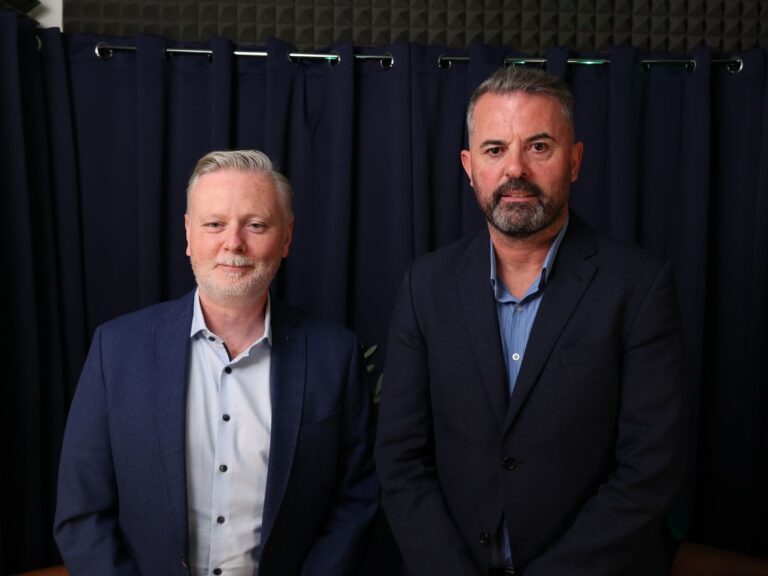
In this episode of our podcast, Jennifer Duffy and Aaron Tangney, Senior Associates in our Financial Regulation Group, discuss what firms need to know when seeking regulatory authorisation in Ireland. They explore why Ireland continues to attract a broad range of applicants seeking authorisation as payment institutions, e-money institutions, MiFID investment firms and crypto-asset service providers, and examine the role of the Central Bank of Ireland as a supervisory authority.
Jennifer and Aaron outline the practical steps involved in the authorisation process, including the importance of establishing genuine local substance, strong governance frameworks, effective board oversight and appropriately resourced management teams.
Podcast Transcription
Jennifer Duffy
Hi there, I’m Jennifer Duffy and this is my colleague Aaron Tangney. We’re both senior associates in the Financial Regulation Group at Arthur Cox. Today we’re going to discuss what firms need to know if they’re looking to get authorised in Ireland. So Aaron, to kick off why are firms choosing Ireland as their EU base?
Aaron Tangney
Ireland in the past few years has become a much more popular location for regulatory authorisation and there are a few clear reasons for that. Brexit was a key driver. So a lot of firms that were authorised and operating in the UK and had quite a big client base needed an EU authorised base and Ireland was a natural choice. And then you had the firms that were based in Ireland and they decided to expand significantly and Ireland was a very good location to accommodate the changes after Brexit. And that makes sense. Ireland’s now the only English speaking common law jurisdiction in the EU. And if you couple that with a particularly strong cultural and business links, a stable political and economic environment, a competitive corporate tax regime, it presents a very clear proposition for firms. I think that’s why a number of firms have decided on Ireland as their location and their base for future needs.
Jennifer Duffy
Absolutely. And I think fintech has been a key driver in that regard. We’ve seen strong and sustained interest from payment services firms and e-money firms using Ireland as their base, particularly for passporting across the EU and MiCA has added an extra dimension in that regard. It’s brought forth a whole new cohort of crypto asset service providers and obviously we’ve had sustained interest from MiFID firms as well. So there’s quite a broad spectrum of regulated firms in Ireland. And I think looking forward, CRD VI will bring a new dimension. In particular we’ll have kind of third country banking groups looking at how they access clients in the EU. And Aaron, what do you think the does the Central Bank have a key role to play in this?
Aaron Tangney
Absolutely. The Central Bank definitely is one of the advantages of Ireland, I think it’s seen as a very credible and experienced supervisor. It applies very rigorous authorisation process, which is a very attractive proposition for clients and the Central Bank absolutely welcomes engagement from firms. And there’s definite benefits for firms in engaging with the Central Bank as part of the authorisation process, provided that firms come to the Central Bank with good governance, genuine substance, and the right people on the ground. So Jen, if a firm is starting the authorisation process in Ireland, what should they be thinking about?
Jennifer Duffy
Yeah, I think there’s a few things that are good to get right early on and just to set the scene, the Central Bank would be the main point of contact and the regulator for most firms looking at being authorised in Ireland. And the Central Bank tend to be focused on a few key themes. Those are people, governance, accountability, board involvement and really where real decision making is taking place. I’m not sure if that’s how you would see it too Aaron.
Aaron Tangney
Yes, absolutely. Picking up on your point about people, that’s absolutely one of the key criteria that the Central Bank will apply. So, whether you’re applying to the Central Bank for an e-money licence, a MiFID firm licence or a credit institution licence, the Central Bank will expect the firm’s mind and management to be in Ireland. So in practical terms, what does that mean? That means that the senior management and key control function holders need to be genuinely based here and that will be an absolute necessity for an applicant to the Central Bank. For international groups, the Central Bank is well aware that strategy will be set at a group level, and that is completely fine provided that the local firm operates effective leadership and control over the Irish entity. As part of the authorisation process, firms need to be thinking early on about the Fitness and Probity Regime that we have in Ireland. So the Central Bank will expect individuals that are carrying on control functions and pre-approval control functions, which are otherwise known as PCFs, to be competent and capable, to act with honesty and integrity and to be financially sound. In the context of PCFs, all applicants should be aware that any person that’s proposed to occupy a role as a PCF in Ireland will need the prior approval of the Central Bank before taking up that position.
Jennifer Duffy
What about governance Aaron?
Aaron Tangney
Governance is another key area and it’s a big part of the application to the Central Bank. The Central Bank will expect that there’s clear management structures in place, that there’s well defined roles and responsibilities and that there’s effective board oversight. And depending on the type of application that is being made to the Central Bank, certain accountability frameworks may also apply, such as SEAR and related conduct standards. There is usually a significant amount of preparatory work involved in making a licence application to the Central Bank. The Central Bank will want detailed or granular information on the proposed business model, any proposed outsourcing arrangements, financial projections, governance, operations and to a certain extent, if relevant, client asset arrangements and for certain regimes, that starts with a key document that’s provided at a very early stage such as your key facts document.
Jennifer Duffy
How important is the business plan in all of this?
Aaron Tangney
The business plan really matters. It’s one of the foundational documents. It needs to be credible, it needs to be granular and it needs to be sustainable. Firms need to clearly explain to the Central Bank in their business plan what is the business model, which types of clients they propose to serve, how the business model is proposed to evolve over time, including under stress.
Jennifer Duffy
Yeah I think firms sometimes view these applications as just a one off regulatory filing, whereas really they should view them as an ongoing process of engagement where you start building that relationship. And I think, you know, that happens quite early on in that first meeting with the Central Bank, which is a really great opportunity both for the Central Bank to try and understand the firm’s business model and understand their governance and control frameworks, and also for the business itself to test its proposal and get some feedback, and then think about whether they really want to invest in that full application. Thereafter the process is quite iterative with the Central Bank. There tends to be lots of follow up questions and lots of back and forth. In the MiFID context, for example, firms will tend to submit a key facts document at this stage. And then there’ll be kind of back and forth with the regulator until such time as they ask for the full application to be submitted. So it’s quite iterative. In practice, what that means is for firms being able to explain their business model and explain their governance structures to demonstrate to the Central Bank that they’re ready to be regulated. And a key part of that is really being open and transparent with the regulator, particularly in terms of ownership, financial projections, senior management, and proposed control frameworks. And I think the other area that we would always suggest firms look at from an early stage is, you know, it’s internal resourcing because there can be quite a lot of back and forth with the regulator. And these applications tend to be quite documentation heavy. And sometimes firms can underestimate how much resourcing that takes internally. So getting internal resourcing right early on is really helpful. And I think on that note, maybe we talk a bit about external resourcing and how we can help.
Aaron Tangney
So external resourcing, external advisers can be particularly helpful to applicants, particularly for any international clients that may be looking at Ireland as a jurisdiction and may not be as familiar with the legal process and the legal system in Ireland. And external resourcing can be particularly helpful as well where you have a complex group structure and particularly where there is complex outsourcing arrangements in place, or perhaps if there is a cross-border element. And that is the type of work that we would often advise clients on in Arthur Cox. At a practical level, in terms of the actual application itself, we can help firms to understand what the central bank is likely to focus on as part of the application, particularly at an earlier stage, because the earlier that certain issues are considered and perhaps provided where details provided more granular detail, the quicker that the firm will move through the process itself. We can also provide very helpful market context and market advice, particularly helpful for international firms again which are establishing in Ireland for the first time and are just getting to grips with the Irish regime and the requirements that the Central Bank will apply as part of the authorisation process.
Jennifer Duffy
Yeah, it’s a really good point. I think these applications they don’t exist in a silo. There’s lots of different areas that can be touched upon, you know, corporate, employment, governance issues, tax issues. So, I think it’s really great to have an external adviser who can advise and bring together all of those various areas. And I think, in addition, that support can continue after authorisation which is really helpful. And the main benefit of having external advisers is not just in the technical legal analysis, which is obviously quite helpful, but I think in the context of an authorisation, external advisers really bring that kind of practical, experience-based judgement to bear, which can be really, really helpful for clients. So I think we can make a real difference. I’m not sure what you think would be kind of the key area where advisers can make that difference.
Aaron Tangney
We can identify issues earlier and we can help clients navigate the regulatory engagement. As you mentioned, it’s not a once-off filing, it’s a period of engagement. And I think at Arthur Cox that’s where we can add particular value for our clients, particularly for our international clients.
Jennifer Duffy
That’s great, Aaron. And I think before we wrap up, if firms were going to take one thing away from today, what should that be?
Aaron Tangney
I think the key takeaway point is that a successful authorisation is usually the result of early planning, strong governance, and credible local substance. And a successful and smooth authorisation begins at a much earlier point than the point at which the authorisation application is submitted to the Central Bank.
Jennifer Duffy
Fantastic. That’s great, Aaron. Thanks so much for your time and thanks for listening. If you have any questions, please feel free to reach out to Aaron or myself or to your usual Arthur Cox contact. You can also check out our website at arthurcox.com. Thanks again.
Podcasts
The Arthur Cox podcast series ‘AC Audio’ is a collection of knowledge and insights across a range of practice areas within the firm. |
 |
 |
 |
Disclaimer: The contents of this podcast are to assist access to information and do not constitute legal or other advice. Specific advice should be sought in relation to specific cases. If you would like more information on this topic, please contact a member of our team or your usual Arthur Cox contact.